
ReflexDAO: Digital Healthcare to Prevent Chronic Disease
Advancing longevity through privacy-protected research into the autonomic nervous system and its role in chronic diseases. ReflexDAO’s decentralized platform enables secure data contribution and confidential analysis, creating personalized, preventative health solutions that benefit all contributors.
Authors
Mike Campbell mike@reflexdao.com
Robin Lehmann robin@reflexdao.com
Jason McEwen jason@reflexdao.com
Max Campbell max@reflexdao.com
Healthcare Innovation
&
Preventative Healthcare
Date
15th May 2025
Abstract
Reflex is redefining the future of healthcare by focusing on the often-overlooked autonomic nervous system (ANS), a critical regulator of vital bodily functions. Dysregulation of the ANS is linked to a wide range of chronic conditions, including cardiovascular, neurological, metabolic, sleep, respiratory, and mental health disorders. By combining high-fidelity sensing, multi-source data integration, and AI-powered health agents, Reflex enables continuous assessment of autonomic function and earlier detection of subtle dysregulations—supporting prevention and personalized health optimization.
Reflex is building a user-first data ecosystem where individuals securely contribute longitudinal health signals and receive immediate value in return. In the initial phase, contributors earn BEAT, a reward token redeemable for premium in-app experiences such as deeper insights, advanced reports, coaching workflows, and participation in challenges and research programs. This creates a practical incentives layer centered on utility and engagement, while driving the creation of high-quality datasets under transparent consent.
As the ecosystem matures and demand for privacy-preserving research access grows, Reflex intends to transition contributor rewards from BEAT to REFLEX—a token designed to support economic alignment and governance within the dataset ecosystem. Rather than serving solely as a payment token, REFLEX is intended to function as the access, staking, and governance layer for organizations seeking to work with the dataset. Organizations may pay for compute and related services in fiat, stablecoins, or other approved payment methods, while being required to hold or stake REFLEX to access certain dataset tiers, compute capacity, pricing benefits, and governance rights. This structure is intended to reduce friction for enterprise adoption while creating a direct link between ecosystem usage, contributor incentives, and long-term token demand. Governance is explicitly grounded in a user-ownership principle: the data belongs to the users, and REFLEX-based governance mechanisms are intended to formalize user control and collective decision-making around dataset permissions, access rules, research priorities, and value distribution.
This litepaper describes Reflex’s mission to advance autonomic health and outlines how a user-owned data model—paired with practical incentives today and tokenized access and governance later—can accelerate discovery, democratize preventative care, and improve long-term health outcomes worldwide.
Introduction
The autonomic nervous system (ANS) is a cornerstone of human health, governing critical involuntary functions such as heart rate regulation, digestion, thermoregulation, vascular tone, and stress responses. Despite its vital role, the ANS remains underexplored in mainstream healthcare, leaving major gaps in how we understand and manage chronic conditions such as cardiovascular disease, metabolic dysfunction, sleep disorders (including sleep apnea), and mental health challenges. These conditions drive a significant share of global mortality and healthcare costs, and are often preceded by subtle, measurable changes in autonomic regulation—signals that traditional healthcare systems rarely monitor continuously or translate into actionable prevention.
Reflex exists to close this gap by unlocking the diagnostic and preventative potential of autonomic reflexes: the moment-to-moment physiological responses governed by the ANS that reflect how the body adapts to stress, recovery, sleep, breathing, and everyday demands. By capturing high-quality autonomic signals over time and converting them into understandable metrics and guidance, Reflex creates a foundation for proactive health—supporting individuals, researchers, and healthcare innovators with data-driven insights that can improve wellbeing and reduce chronic disease risk.
This litepaper introduces the Reflex vision: a user-first ecosystem where high-fidelity sensing, privacy-preserving data infrastructure, and AI-powered health agents enable continuous autonomic assessment and earlier detection of dysregulation. Reflex rewards contributors for generating valuable longitudinal data through BEAT, an in-app reward token redeemable for premium insights and experiences. As the ecosystem matures, Reflex intends to transition rewards from BEAT to REFLEX, a token designed to support economic alignment and user-centric governance within the dataset ecosystem. Organizations may pay for compute and related services in fiat, stablecoins, or other approved payment methods, while being required to hold or stake REFLEX to access certain dataset tiers, compute capacity, pricing benefits, and governance rights. Throughout, the guiding principle remains constant: the data belongs to users, and governance mechanisms are intended to formalize user control and collective decision-making around permissions, priorities, and value distribution.
Problem Statement
The autonomic nervous system (ANS), while vital to maintaining the body’s homeostasis, remains largely invisible in everyday healthcare. Much like the electrical system in a car, the ANS operates silently in the background—regulating involuntary functions such as heart rate, blood pressure, digestion, vascular tone, thermoregulation, and stress responses. Yet when autonomic regulation becomes impaired or imbalanced, it can trigger cascading health consequences. Unlike many other conditions, ANS dysfunction is difficult to directly “image” or observe in routine clinical workflows, which means dysregulation often goes undetected until it contributes to serious disease across cardiovascular [1], neurological [2], metabolic [3], sleep [4], respiratory [5], and mental health domains [6].
Chronic diseases such as cardiovascular disease, diabetes, and neurodegenerative disorders are closely linked to autonomic dysfunction. In 2019, 74% of deaths worldwide were attributed to chronic (non-communicable) diseases [7], and in the United States alone, 60% of the population lives with at least one chronic condition [8]. These illnesses drive 90% of the country’s healthcare costs, creating an enormous financial and social burden [9]. Comparable patterns exist across many industrialized countries, underscoring a global prevention gap.
Despite the ANS’s central role in chronic disease, frequent, scalable monitoring of autonomic function remains limited. Early indicators—such as changes in heart rate variability (HRV) and other autonomic markers—are often missed because healthcare systems are largely designed to react to disease rather than continuously detect early dysregulation and support prevention. Many people lack access to tools that translate day-to-day autonomic signals into actionable insights, leaving underlying issues unaddressed until symptoms escalate.
At the same time, wearables capable of capturing autonomic signals are becoming widespread, but their full potential is still underutilized. Data is fragmented across devices and platforms; users often lack meaningful control over how their data is used; and privacy concerns and unclear consent mechanisms limit responsible collaboration. Crucially, there is no widely adopted framework that enables researchers and healthcare innovators to learn from large-scale longitudinal autonomic data without copying or taking custody of raw user data, and without excluding the very individuals generating that data from the resulting value and insights.
This combination—ANS invisibility, reactive care models, fragmented data, and weak user control—perpetuates the chronic disease crisis, leaving millions at risk and placing growing strain on healthcare systems worldwide. Reflex exists to address this gap by enabling continuous autonomic assessment, user-controlled data contribution, and privacy-preserving research workflows—paired with an incentives model that rewards contributors today through BEAT, redeemable for premium insights and experiences, and can evolve over time toward REFLEX as the access, staking, and governance layer for the dataset ecosystem. Under this model, organizations may pay for compute and related services in fiat, stablecoins, or other approved payment methods, while holding or staking REFLEX to access certain dataset tiers, compute capacity, pricing benefits, and governance rights.
The Role of Autonomic Reflexes
Autonomic reflexes are involuntary responses that regulate vital bodily functions such as heart rate, blood pressure, respiration, digestion, and temperature control. These reflexes are crucial for maintaining homeostasis, the body's capacity to sustain a stable internal environment amid external fluctuations.
Examples of Autonomic Reflexes:
Baroreflex: Adjusts blood pressure during posture changes by modulating heart rate and vascular tone [10].
Bainbridge Reflex: Coordinates heart rate with respiration during supine positions [11].
Inflammatory Reflex: Governs the immune response via the autonomic nervous system [12].
Diving Reflex: Maintains brain oxygenation during breath holds by regulating heart rate and blood flow [13].
Thermoregulatory Reflex: Manages sweating and blood flow to stabilize body temperature [14].
Dysfunction in these reflexes can lead to health challenges such as hypertension, arrhythmias, and other chronic conditions. ReflexDAO aims to measure and analyze these reflexes to provide actionable insights for early detection and effective interventions.
The Autonomic Nervous System: Sympathetic and Parasympathetic Balance
The autonomic nervous system (ANS), which governs autonomic reflexes, consists of two complementary branches: the sympathetic nervous system (SNS) and the parasympathetic nervous system (PNS). The SNS drives the "fight or flight" response, increasing heart rate, dilating airways, and redirecting blood flow to muscles during stress or danger. While essential for immediate threats, chronic SNS activation can be detrimental to health. Conversely, the PNS supports the "rest and digest" state, promoting recovery by slowing the heart rate, stimulating digestion, and conserving energy. Optimal health arises from a dynamic equilibrium between these branches, enabling effective stress responses while maintaining recovery and repair processes. Chronic stress or unhealthy lifestyles can disturb this balance, leading to autonomic dysfunction and heightened risks for chronic diseases.
Heart Rhythm Analysis: A Non-Invasive Window into Autonomic Health
Heart rhythm analysis is an invaluable, non-invasive technique for assessing autonomic function. By examining heart rate patterns and variability, researchers and clinicians can derive insights into the activity and balance of the ANS. Two critical metrics are heart rate variability (HRV) and respiratory sinus arrhythmia (RSA). HRV measures fluctuations in the intervals between consecutive heartbeats, with higher HRV indicating robust parasympathetic activity and better autonomic flexibility. Conversely, lower HRV is associated with stress, fatigue, and elevated disease risk. RSA reflects heart rate variations synchronized with breathing, serving as a marker of efficient cardiovascular regulation.
This form of analysis offers several advantages, including the early detection of autonomic dysfunction, the identification of subtle markers for chronic diseases, and the ability to monitor the efficacy of lifestyle and therapeutic interventions. Through heart rhythm analysis, Reflex seeks to unlock new pathways for understanding autonomic health and its profound impact on chronic disease prevention and management.
The idea
The concept behind Reflex is simple yet transformative: to illuminate the invisible realm of the autonomic nervous system (ANS) and use its signals to improve how chronic disease is understood, prevented, and managed. The ANS operates largely unnoticed while regulating critical bodily functions. When autonomic regulation becomes impaired—often long before symptoms become obvious—it can contribute to conditions such as cardiovascular disease, diabetes, sleep apnea, and neurodegenerative disorders. Yet today, these signals are rarely monitored continuously or translated into practical guidance, leaving a major gap in preventative care.
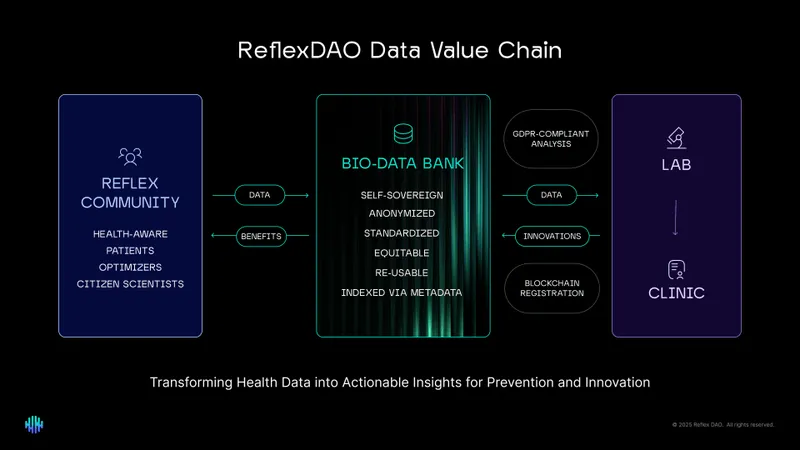
Reflex proposes a shift from reactive healthcare to proactive, data-driven health management. By combining high-quality wearable sensing, decentralized participation primitives, and AI-driven analytics, Reflex creates a robust health data value chain: individuals can monitor autonomic patterns and receive actionable insights; researchers can study large-scale longitudinal data to validate biomarkers and hypotheses; and healthcare innovators can translate findings into targeted interventions and services that users can opt into.
At the core of Reflex is the Reflex Health Data Platform, designed to collect, analyze, and securely share high-resolution autonomic data while keeping control anchored with the user. Reflex embraces the DePIN concept [15] as a practical way to scale real-world health data collection: a decentralized network of devices generating valuable longitudinal signals. Participation and consent are coordinated through an embedded Ethereum wallet inside the mobile app, enabling user identity, permissioning, and transparent participation accounting. Dataset interaction is enabled through Reflex’s data collaboration and access layer, supporting permissioned workflows that allow approved researchers and organizations to work with user-authorized datasets under clear rules—without Reflex becoming a centralized data monopolizer.
To make the ecosystem sustainable and fair, Reflex tokenizes participation in a utility-first way. In the initial phase, contributors earn BEAT, a reward token redeemable for premium in-app insights and experiences. As the platform matures and enterprise demand for research and product development grows, Reflex intends to transition rewards from BEAT to REFLEX—a token designed to support economic alignment, access, and governance within the dataset ecosystem. Organizations may pay for compute and related services in fiat, stablecoins, or other approved payment methods, while being required to hold or stake REFLEX to access certain dataset tiers, compute capacity, pricing benefits, and governance rights. Over time, REFLEX may also support governance over dataset rules in a way that formalizes what is fundamental to Reflex’s mission: the dataset belongs to users, and users should have meaningful control over how it is accessed, used, and how value is distributed.
Reflex envisions a future where subtle autonomic signals guide personalized decisions, improve chronic disease outcomes, and expand access to preventative care globally—while ensuring that contributors are not simply data sources, but long-term beneficiaries of the system they help build.
Reflex advances proactive autonomic health through three complementary solutions:
1) Decentralized Autonomic Monitoring
Reflex enables individuals to track autonomic nervous system (ANS) health in everyday life using accessible wearable devices and mobile sensing. By moving measurement beyond occasional clinical snapshots into continuous, real-world monitoring, users gain ongoing visibility into their regulation, recovery, and stress patterns—while optionally contributing longitudinal data that helps build a diverse, high-quality bio-data resource.
2) Unified, User-Controlled Data Infrastructure
Reflex reduces fragmentation by providing a single platform for collecting, organizing, and permissioning autonomic health data. User participation is coordinated through an embedded Ethereum wallet in the mobile app, supporting portable identity and explicit consent for how data may be used. Reflex’s data collaboration and access layer is designed to support transparent, auditable research workflows—so approved researchers and innovators can work with user-authorized datasets under clear rules, without requiring uncontrolled redistribution of raw user data.
3) Aligned Incentives and Sustainable Economics
Reflex aligns contributors and data consumers through a phased incentives model:
- Today: users earn BEAT, a reward token redeemable for premium in-app insights and experiences (e.g., deeper analytics, reports, coaching workflows, challenges).
- Over time, Reflex intends to transition rewards from BEAT to REFLEX—a token designed to support economic alignment, access, and governance within the dataset ecosystem. Organizations may pay for compute and related services in fiat, stablecoins, or other approved payment methods, while being required to hold or stake REFLEX to access certain dataset tiers, compute capacity, pricing benefits, and governance rights. REFLEX may also support governance mechanisms that formalize user control over dataset rules and value distribution.
This creates a sustainable value loop where:
- users are rewarded for validated contributions and positive engagement,
- researchers and companies can access high-quality longitudinal datasets through permissioned workflows,
- healthcare innovators can build personalized interventions and services users choose to adopt, and
- revenue from enterprise compute/services supports continued product development, research, and contributor incentives.
Together, these elements help shift healthcare from reactive treatment to proactive wellness—centered on understanding and optimizing autonomic regulation.
A Comprehensive Solution to an Urgent Problem
Reflex is committed to improving preventative healthcare by making autonomic nervous system (ANS) regulation measurable, understandable, and actionable in everyday life. By rethinking how health data is captured, analyzed, and responsibly used, Reflex aims to accelerate scientific discovery, enable personalized health management, and support new kinds of preventative and therapeutic services—while keeping control anchored with the individual.
Reflex
At the heart of Reflex is a real-world data engine built around wearable sensors and mobile sensing designed to capture high-quality autonomic signals—such as heart rate, interbeat intervals, and heart rate variability (HRV)—in natural conditions. These measurements are non-invasive, user-friendly, and designed to interoperate with both Reflex devices and, where appropriate, third-party data sources. This approach enables diverse, high-resolution longitudinal datasets that reflect real-life physiology, addressing the limitations of short, clinic-based snapshots and narrow research cohorts.
By integrating multiple data sources—including cardiovascular and sleep-related metrics, self-reported context, and (optionally over time) additional modalities such as genomics and lab results—Reflex helps build a richer “health portrait” that can reveal patterns not visible in isolated metrics. This multidimensional view supports more nuanced risk awareness and better personalization, empowering individuals to take proactive steps toward improved outcomes.
Reflex’s data platform is designed around a user-first principle: individuals retain control over their data and how it is used. Participation and consent are coordinated through an embedded Ethereum wallet in the Reflex mobile app, supporting portable identity, permissioning, and transparent participation accounting. Reflex uses privacy-preserving and permissioned data access workflows to reduce fragmentation and enable collaboration—so approved researchers and innovators can work with user-authorized datasets under clear rules, without turning the ecosystem into another centralized data silo.
Reflex also introduces a practical incentives layer to align stakeholders and sustain long-term participation. In the initial phase, contributors earn BEAT, a reward token redeemable for premium in-app experiences—such as deeper insights, advanced reports, coaching workflows, and challenges—encouraging consistent engagement and the creation of valuable longitudinal data. As the ecosystem matures, Reflex intends to transition rewards from BEAT to REFLEX, a token designed to support economic alignment, access, and governance within the dataset ecosystem. Organizations may pay for compute and related services in fiat, stablecoins, or other approved payment methods, while being required to hold or stake REFLEX to access certain dataset tiers, compute capacity, pricing benefits, and governance rights. Over time, REFLEX may also support governance mechanisms that formalize user control over dataset rules and value distribution—grounded in the principle that the dataset ultimately belongs to users.
The platform supports earlier detection of health risk patterns by analyzing integrated signals and providing personalized insights across key focus areas, including cardiovascular health, sleep and recovery, neurological regulation, metabolic resilience, respiratory function, and mental wellbeing. Reflex is designed to support preventative and complementary strategies such as paced breathing [17], mindfulness practices [18], movement therapy [19][20], audio neuromodulation [21], aromatherapy [22], and vagal nerve stimulation [23], translating insights into practical interventions users can adopt.
Finally, Reflex delivers these experiences through AI-powered health agents that help users interpret patterns, identify risks, recommend interventions, and track progress over time. This creates a feedback loop where individuals benefit from actionable guidance, researchers gain access to larger and more representative longitudinal datasets under user permission, and healthcare innovators can translate validated discoveries into services people choose to use. In doing so, Reflex aims to redefine autonomic health as a scalable, inclusive, and transformative foundation for preventative care.
Reflex: Vision and Structure
Reflex is building a transformative approach to preventative healthcare by focusing on the autonomic nervous system (ANS)—a core regulator of human physiology that is rarely monitored continuously or translated into actionable prevention. As a company, Reflex is addressing longstanding healthcare challenges such as fragmented data, limited longitudinal monitoring, and slow translation of research into practical tools that people can use every day.
At the core of Reflex is a platform that enables large-scale autonomic monitoring through non-invasive wearables and mobile sensing, while supporting responsible collaboration between individuals, researchers, and healthcare innovators. Participation and consent are coordinated through an embedded Ethereum wallet in the mobile app, enabling portable identity, permissioning, and transparent participation accounting. Users retain meaningful control over their health information and can choose how their data is used.
Reflex aligns contributors and data consumers through a phased incentive and access model. In the initial phase, users earn BEAT, a reward token redeemable for premium in-app insights and experiences, encouraging sustained engagement and the creation of valuable longitudinal datasets. As the ecosystem matures, Reflex intends to transition rewards to REFLEX—a token designed to support economic alignment, access, and governance within the dataset ecosystem. Organizations may pay for compute and related services in fiat, stablecoins, or other approved payment methods, while being required to hold or stake REFLEX to access certain dataset tiers, compute capacity, pricing benefits, and governance rights. Over time, REFLEX may also support governance mechanisms focused specifically on dataset access rules and value distribution, grounded in the principle that the dataset ultimately belongs to users and that users should have collective influence over how it is accessed and used.
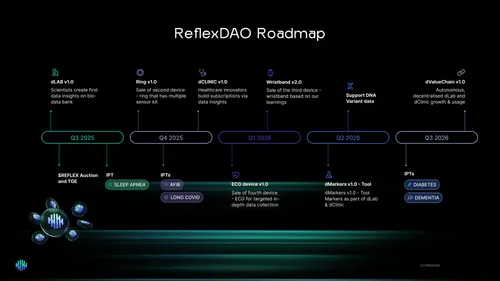
Over the next five years, Reflex aims to scale accessible sensing and continuous autonomic assessment so that large populations can monitor ANS regulation and benefit from earlier detection of dysregulation. The long-term vision is to integrate with broader research and healthcare ecosystems over the coming decade—expanding access to preventative care, reducing barriers to participation, and accelerating the translation of autonomic science into personalized, practical interventions.
Goals
Reflex aims to build a sustainable ecosystem powered by a robust health data value chain—where individuals generate valuable longitudinal autonomic data, researchers and innovators turn that data into validated insights, and those insights are translated into services that improve real-world outcomes. Central to this mission is ensuring that contributors across the ecosystem—users, researchers, healthcare innovators, and commercial partners—share in the benefits created by responsible data collaboration.
Key objectives
Build a Health Data Value Chain
Establish a seamless pipeline where contributors generate high-quality longitudinal data, analytics convert signals into actionable insights, and validated findings are translated into practical preventative tools and services.
Accelerate Research and Biomarker Discovery
Enable researchers and innovators to work with user-permissioned datasets at scale to validate biomarkers, improve models of autonomic regulation, and advance the science of chronic disease prevention.
Empower Individual Participation and Control
Give users meaningful control over how their data is used through explicit consent and permissions (coordinated via the embedded Ethereum wallet), while rewarding participation with practical value today and economic upside over time.
Align Incentives and Sustain the Ecosystem
Use a phased incentives model—BEAT rewards redeemable for premium in-app experiences now, transitioning toward REFLEX rewards over time—to align long-term contribution with enterprise demand. Organizations may pay for compute and related services in fiat, stablecoins, or other approved payment methods, while being required to hold or stake REFLEX to access certain dataset tiers, compute capacity, pricing benefits, and governance rights. This creates a sustainable loop where ecosystem usage supports continued platform growth, research, and contributor rewards, while reinforcing long-term alignment between data contributors and data consumers.
Scale Responsibly Through Partnerships
Collaborate with device partners, researchers, and healthcare innovators to expand access, improve data quality, and support scalable delivery of preventative and personalized interventions.
Strategies
Reflex is built on three reinforcing strategies that work together to advance proactive autonomic health and accelerate digital health innovation:
1) Data-Driven Health Assessment Platform (Reflex App)
Reflex centers on a differentiated mobile app and wearable-driven experience that analyzes autonomic and heart rhythm signals to deliver personalized, actionable insights. The platform emphasizes practical, evidence-aligned interventions—such as paced breathing, audio neuromodulation, and vagal nerve stimulation—while building toward condition-focused pathways where measurement and impact can be tracked over time. Early clinical and commercial traction can be driven through targeted focus areas such as sleep-related dysregulation, atrial fibrillation risk signals, and post-viral / long COVID-related autonomic instability.
2) Privacy-Preserving, User-Controlled Bio-Data Platform
Reflex is building a user-first data platform designed to support large-scale longitudinal autonomic research while maintaining meaningful user control. Participation and consent are coordinated through an embedded Ethereum wallet in the mobile app, enabling portable identity, permissioning, and transparent participation accounting. Approved researchers and innovators can work with user-authorized datasets through permissioned workflows that reduce unnecessary copying and redistribution of raw user data. This supports a virtuous cycle: data enables research and biomarker discovery; validated findings improve personalized experiences and interventions; and improved experiences drive more high-quality longitudinal data.
3) Web2–Web3 Bridge for Healthcare Collaboration and Adoption
Reflex bridges traditional healthcare stakeholders with modern consent, permissioning, and incentive mechanisms. By collaborating with academic groups, public health organizations, device partners, and private sector innovators, Reflex can plug into existing healthcare infrastructure while introducing transparent, user-aligned data collaboration. Near-term adoption is enabled through familiar B2B relationships and service delivery; long-term alignment is reinforced through incentives that ensure value flows back to contributors. As the ecosystem matures, organizations may pay for compute and related services in fiat, stablecoins, or other approved payment methods, while being required to hold or stake REFLEX to access certain dataset tiers, compute capacity, pricing benefits, and governance rights—supporting sustainability, contributor alignment, and user-centric governance over time.
Together, these strategies create an integrated ecosystem where data integrity, privacy, research innovation, and practical interventions reinforce each other: the Reflex app generates valuable longitudinal signals; the data platform enables responsible research and development; and the collaboration layer supports real-world adoption—creating a sustainable cycle that benefits users, researchers, and innovators.
Initiatives
Advancing the Reflex App Platform
- Launch targeted marketing campaigns to engage diverse user groups (e.g., sleep improvement communities, chronic condition populations, self-carers, and performance/biohacking audiences).
- Integrate additional contextual inputs over time (e.g., self-reported symptoms, environment, lifestyle factors) to improve interpretability and personalization; optionally support deeper biological inputs (e.g., genomics) in later phases.
- Develop subscription-based personalized feedback services (premium insights, reports, coach workflows).
- Partner with credible complementary and holistic health educators and creators to expand reach and adoption.
Expanding the User-Controlled Bio-Data Platform
- Implement token-based incentives to grow high-quality longitudinal datasets: BEAT rewards redeemable for premium experiences now, transitioning toward REFLEX rewards over time.
- Establish research partnerships with academic institutions, clinics, and independent research groups to validate biomarkers and outcomes.
- Create a research support program (grants, data access credits, or co-development partnerships) for high-impact studies using user-authorized datasets.
- Enable third-party developer and innovator access for new tools and applications via permissioned interfaces and privacy standards.
Strengthening the Web2–Web3 Collaboration Bridge
- Develop revenue-generating partnerships with traditional healthcare and research organizations (e.g., paid studies, biomarker validation projects, population health pilots).
- Build an open device ecosystem that supports multiple wearable sensors and data collection tools, improving accessibility and data diversity.
- Foster collaborations with pharmaceutical, insurance, and health tech companies for real-world applications, data standards, and API integrations—while maintaining user permissioning as a non-negotiable principle.
- Grow relationships with health and wellness communities to connect mainstream and decentralized participation models.
Each initiative is designed to expand Reflex’s user base and real-world impact while building sustainable economics. In the early stage, value is delivered directly to users through premium insights funded by product growth and partnerships. As the ecosystem matures, REFLEX becomes the required “compute fuel” for organizations analyzing the dataset—supporting long-term sustainability and enabling contributor rewards and user-centric dataset governance over time.
Value Capture Model
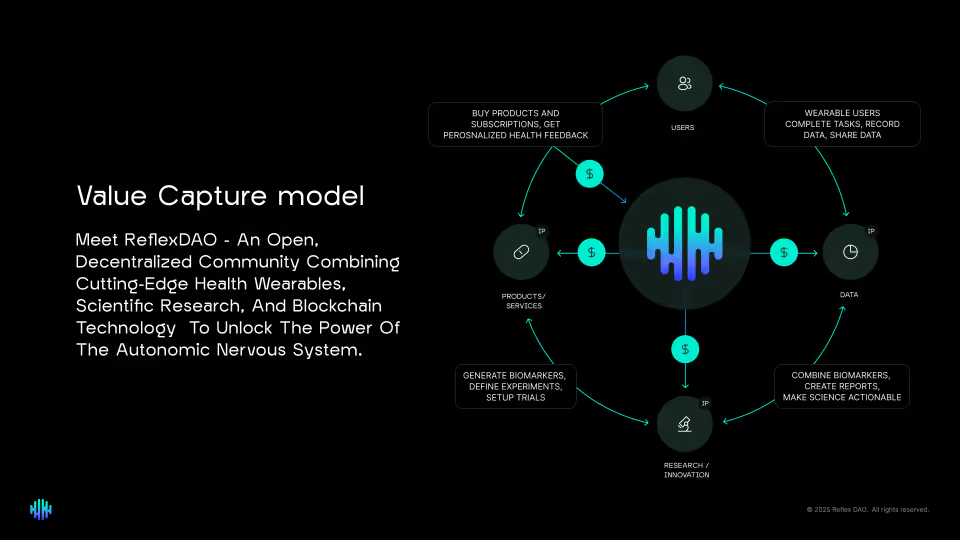
Reflex’s value capture model is designed to be sustainable and user-aligned: it funds long-term product development and research while ensuring that the people generating the data ultimately share in the value created. The model connects three elements—(i) user-owned data, (ii) privacy-preserving collaboration, and (iii) aligned incentives—so that growth in research and commercial usage strengthens the ecosystem rather than extracting from it.
Data as the foundational asset (user-owned)
At the center of the model is data as a foundational asset, with a clear principle: the data belongs to users. Reflex enables individuals to contribute longitudinal autonomic signals under explicit permissions, and to receive value in return. Approved organizations can access services built on top of the dataset—such as analytics, biomarker validation, and research workflows—under permissioned rules designed to be transparent and auditable, supporting ethical data use and long-term trust.
Enterprise compute and analysis (REFLEX as the access and alignment layer)
As the ecosystem matures, Reflex intends to introduce REFLEX as the token that underpins access, staking, and governance within the dataset ecosystem. Organizations may pay for compute and related services in fiat, stablecoins, or other approved payment methods, while being required to hold or stake REFLEX to access certain dataset tiers, compute capacity, pricing benefits, and governance rights. This creates a direct alignment between enterprise demand and contributor benefit: when organizations pay to use the dataset responsibly, that usage can support contributor rewards, platform sustainability, and continued innovation, while REFLEX helps reinforce long-term ecosystem participation and value alignment. Over time, REFLEX may also support governance mechanisms focused specifically on dataset access rules and value distribution, formalizing user control over how the dataset is used.
Products and services that strengthen the data flywheel
Reflex also expects to generate value through products and services that expand measurement, improve engagement, and increase dataset quality, including:
- Wearable devices and sensing experiences that grow the real-world data network and improve signal fidelity.
- Premium app subscriptions and insight services, where users can access deeper analytics, reports, and coaching workflows (initially unlocked via BEAT and/or subscriptions).
- Sponsored research and collaborations, where organizations fund targeted studies and validation efforts using user-authorized datasets.
- Licensing of validated intellectual property, such as algorithms, predictive models, and biomarker-derived insights, to partners who can deploy them responsibly in products and services.
Incentives that start with utility and evolve to economic rewards
In the initial phase, Reflex rewards users with BEAT, a token redeemable for premium in-app insights and experiences. This keeps incentives grounded in immediate product utility and sustained participation. As the ecosystem matures and enterprise usage grows, Reflex intends to transition contributor rewards from BEAT to REFLEX, enabling stronger economic alignment between dataset usage and contributor benefit. Organizations may pay for compute and related services in fiat, stablecoins, or other approved payment methods, while being required to hold or stake REFLEX to access certain dataset tiers, compute capacity, pricing benefits, and governance rights.
Together, these value streams—enterprise compute services, devices, premium insights, research collaborations, and validated IP—create a robust model that supports continuous innovation while keeping the ecosystem aligned with user ownership and long-term participation.
Tokenomics
Beat
BEAT is a Phase 1 reward and utility token designed to incentivize high-quality participation and deliver immediate value to contributors inside the mobile app experience. It exists to solve a practical early-stage problem: how to motivate consistent, high-integrity longitudinal data contribution and health-positive engagement without relying on speculation, external liquidity, or complex governance from day one. BEAT turns contribution into tangible utility that users can access right away.
At this stage, the priority is building a large, diverse, and reliable dataset and pairing it with experiences that help individuals understand and improve autonomic regulation over time. A token that is redeemable inside the product helps achieve both goals. First, it provides a clear incentive for users to contribute repeatedly—critical for autonomic measurement where baselines, trends, and variability are more informative than single snapshots. Second, it ensures contributors benefit directly through premium features and experiences, rather than waiting for future network effects.
Earning BEAT is tied to validated participation. Users may earn BEAT for contributing wearable and mobile sensor data under user-controlled permissions, completing app-defined activities (such as streaks, challenges, or guided protocols), participating in approved research studies or targeted data campaigns, and (where enabled) providing optional context inputs such as questionnaires or symptom check-ins. Issuance may be quality-weighted so that rewards better reflect the value of the contribution—for example, higher rewards for consistent longitudinal contributions, verified devices, sessions that meet integrity thresholds, or contributions aligned with specific research objectives. This approach discourages low-quality farming and encourages the behaviors and data characteristics that make the dataset more useful.
Using BEAT is intentionally practical and product-centered. BEAT is redeemable for premium experiences such as deeper insight views and advanced analytics, report generation and export tools, additional coaching workflows and guided programs, challenge entry and research participation boosts, and enhanced personalization or data controls where offered. Because BEAT is redeemed within the product, it functions as a utility layer that can evolve over time as new premium experiences are added.
Design intent is to keep BEAT utility-first. BEAT is not intended to represent equity or ownership, and it does not provide governance rights over the dataset. Instead, it is a mechanism for rewarding genuine contribution and sustaining engagement, while keeping incentives aligned with real user benefit.
Over time, as organizational demand for dataset analysis grows, a separate token may be introduced that carries real economic utility and is required for organizations to run compute and analysis on the dataset. If such a token is introduced, an optional conversion pathway may be enabled for certain BEAT balances, subject to clearly defined rules designed to protect the ecosystem and reward genuine contributors. Any conversion program (if implemented) would prioritize BEAT earned via verified data contribution, include anti-abuse safeguards (such as provenance checks, caps, and rate limits), and may occur over a multi-month schedule. BEAT would continue to function as an in-app utility credit regardless of any conversion option.
Reflex
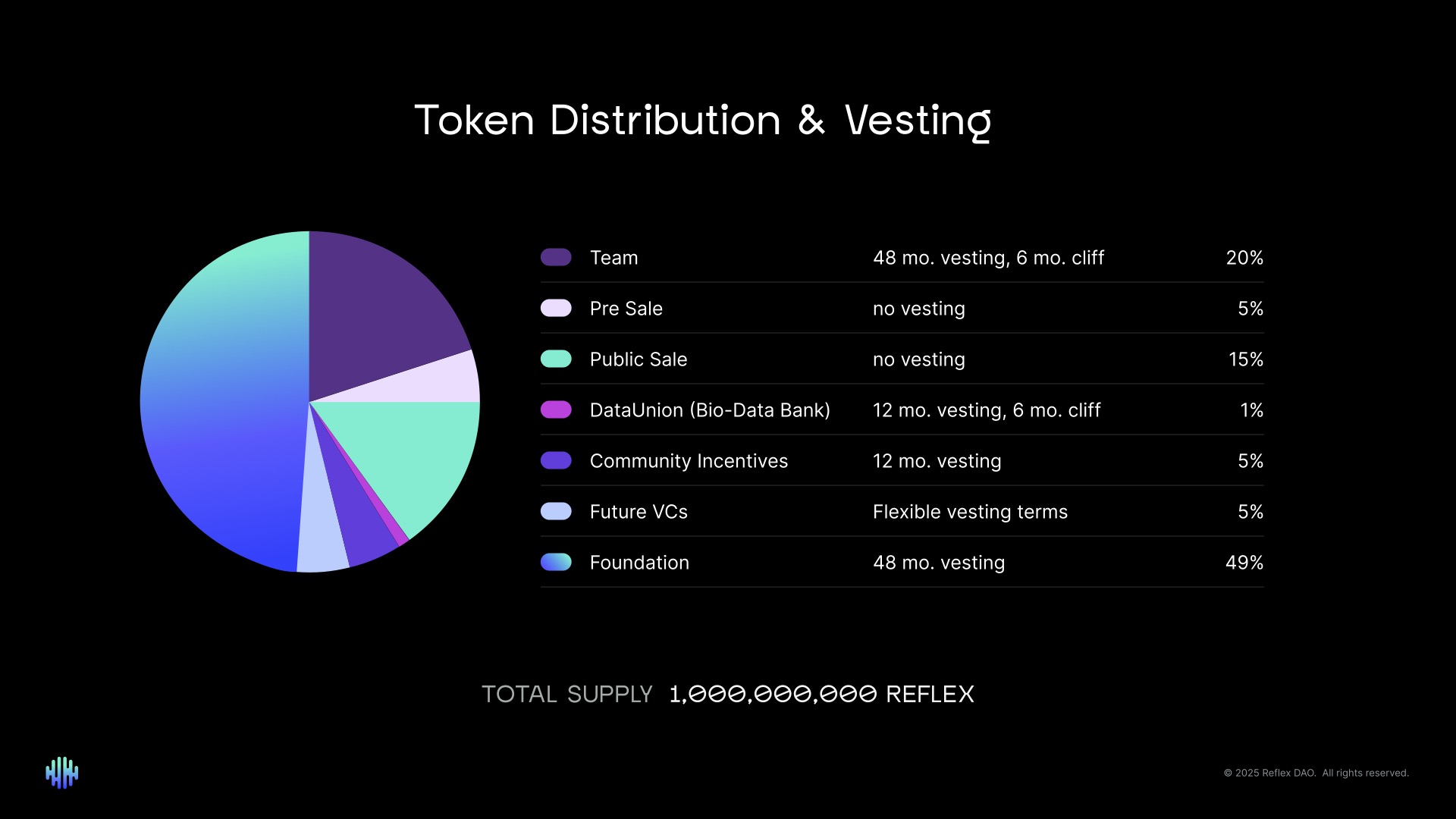
REFLEX is a Phase 2 token designed to align the long-term economics, access model, and governance of a user-owned health dataset. It is intended to be introduced once the ecosystem has reached meaningful scale—large volumes of high-quality longitudinal data, demonstrated research utility, and real demand from organizations seeking to work with the dataset. REFLEX exists for two linked reasons: first, to serve as the access, staking, and alignment layer for organizations using the dataset ecosystem; and second, to support governance over dataset rules in a way that formalizes user control and collective decision-making.
The core principle is that the dataset belongs to users. REFLEX is intended to help make this principle enforceable at scale by linking organizational usage to explicit permissions, transparent accounting, and user-aligned incentives. Rather than allowing value to be extracted by centralized intermediaries, the system is designed so that when organizations benefit from the dataset, contributors and the broader ecosystem benefit as well.
Using REFLEX (dataset access, staking, and governance). Organizations—such as researchers, healthcare innovators, and commercial partners—may pay for compute and related services in fiat, stablecoins, or other approved payment methods. At the same time, they may be required to hold or stake REFLEX in order to access certain dataset tiers, compute capacity, pricing benefits, priority workflows, and governance rights. This may apply to activities such as cohort selection, analytics jobs, biomarker validation studies, model training workflows, and other approved research or product-development activities. This structure is intended to reduce friction for enterprise adoption while creating a direct link between dataset usage, contributor benefit, and long-term ecosystem alignment.
Value routing and sustainability. Revenue generated through compute, analysis, and related services can be allocated under a transparent policy across contributor reward pools, ecosystem operations and security, research collaboration and validation costs, and long-term sustainability mechanisms. Reflex may also direct a portion of ecosystem revenues toward REFLEX-related treasury or market-based mechanisms designed to strengthen long-term alignment within the ecosystem. The intent is to create a durable value loop where institutional and organizational demand supports continued platform growth, contributor benefit, and ongoing innovation, rather than turning the dataset into a one-way extraction model.
Governance intent (governing the dataset, not the company). REFLEX may also support governance mechanisms focused specifically on dataset governance: how access rules are defined, how permissions and usage policies evolve, how research priorities are set, and how value is distributed back to contributors. Governance is intended to be bounded and purpose-driven—centered on protecting user ownership, ensuring ethical use, and maintaining transparency—rather than governing the company itself.
Distribution and contributor alignment. REFLEX is intended to be distributed in a way that aligns long-term contribution with long-term value creation. This may include allocations for contributor rewards, ecosystem development, research and partnership initiatives, and long-term sustainability. Contributor distributions may include vesting or other mechanisms designed to encourage long-term alignment and reduce short-term sell pressure. The transition from Phase 1 rewards to REFLEX-based rewards is intended to reflect the maturation of the ecosystem: contributors move from receiving primarily in-app utility to participating in a broader economic and governance layer linked to real organizational usage.
Relationship to BEAT (transition and optional conversion). When REFLEX is introduced, contributor rewards may transition from BEAT to REFLEX. In addition, an optional conversion pathway may be enabled for certain BEAT balances, subject to clearly defined rules designed to protect the ecosystem and reward genuine contributors. Any conversion program, if implemented, would prioritize balances earned through verified contribution, include anti-abuse safeguards such as provenance checks, caps, and rate limits, and may occur over a multi-month schedule. BEAT can continue to function as an in-app utility credit regardless of any conversion option.
In summary, REFLEX is designed to make dataset usage sustainable, user-aligned, and commercially practical. Organizations may pay for compute and related services in fiat, stablecoins, or other approved payment methods, while holding or staking REFLEX to access elements of the dataset ecosystem and participate in governance. In this way, REFLEX helps formalize user control over dataset rules, align enterprise demand with contributor benefit, and support long-term ecosystem sustainability.
Conclusion
Reflex presents a bold vision for transforming preventative healthcare by making autonomic regulation measurable, understandable, and actionable at scale. By focusing on the autonomic nervous system, Reflex addresses critical gaps in health monitoring, research, and chronic disease prevention—shifting the paradigm from reactive treatment to proactive, data-driven care.
Reflex is built around a user-first principle: individuals should retain meaningful control over their data and share in the value created through responsible collaboration. Through privacy-preserving, permissioned data workflows and an incentives model that begins with practical utility through BEAT and can evolve toward REFLEX as the access, staking, and governance layer for the dataset ecosystem, Reflex aims to accelerate discovery, enable personalized interventions, and deliver scalable health solutions that benefit users, researchers, and innovators worldwide.
Disclaimer
PLEASE CONSULT YOUR LEGAL AND FINANCIAL ADVISORS BEFORE CONSIDERING PARTICIPATING IN THE TOKEN LAUNCH AND TOKEN AUCTION.
This White Paper available at https://www.reflexdao.com and any token launch and auction terms and conditions do not constitute a prospectus, an offer document of any sort, nor are intended to constitute an offer of securities, nor a solicitation for investment in securities in any jurisdiction.
If you decide to contribute to the token launch and token auction, please note that your contribution does not represent, constitute or involve the exchange of cryptocurrencies for any form of securities, investment units and/or form of ordinary shares in the project, platform, company, or any other entity. The Tokens to be issued and distributed are not intended to constitute securities and/or collective investment units in any project, platform, association, company or entity of any kind. Participants do not receive any form of dividend or other revenue rights, nor does represent any participation in a profit-sharing scheme.
THE REFLEX DAO LLC MAKES NO WARRANTY OR REPRESENTATION, WHATSOEVER, WITH RESPECT TO THE TOKENS AND THE NATURE OF THE TOKENS, INCLUDING, BUT NOT LIMITED TO ANY (i) WARRANTY OF MERCHANTABILITY; (ii) WARRANTY OF FITNESS FOR A PARTICULAR PURPOSE; (c) WARRANTY OF TITLE; OR (iii) WARRANTY AGAINST INFRINGEMENT OF INTELLECTUAL PROPERTY RIGHTS OF A THIRD PARTY; WHETHER ARISING BY LAW, COURSE OF DEALING, COURSE OF PERFORMANCE, USAGE OF TRADE, OR OTHERWISE. EXCEPT AS EXPRESSLY SET FORTH HEREIN, THE PARTICIPANT ACKNOWLEDGES THAT IT HAS NOT RELIED UPON ANY REPRESENTATION OR WARRANTY MADE BY THE ASSOCIATION, OR ANY OTHER PERSON ON THE ENTITY’S BEHALF.
The White Paper information provided at the web page and any token launch and token auction Terms and Conditions in any part thereof and any copy thereof must not be transmitted to any country where distribution or dissemination of these documents and its information is prohibited or restricted.
No regulatory authority has examined or approved to this date of any of the information set out in this White Paper. The publication, distribution or dissemination of the White Paper do not imply that the applicable laws, regulatory requirements or rules have been complied with.
To the maximum extent permitted by applicable laws, regulations and rules, the association, its founders, team members, advisors, contributors and any third parties involved in this project shall not be liable for any direct, indirect, special incidental or consequential or other losses of any kind, in tort, contract or otherwise, including but not limited to loss of revenue, income or profits, and loss of use or data, arising out of or in connection with any acceptance of or reliance on the information contained in this White Paper on in the website.
All statements contained in this White Paper and webpage, statements made in newsletters or in any place accessible by the public and oral statements that may be made by the association, its founders, team members, advisors, contributors and any third party involved in the project and acting on behalf of the association, that are not statements of historical fact constitute “forward-looking statements”.
All statements regarding the association, its financial position, business strategies, plans and the prospects of the industry which the association is in are “forward-looking statements.” Neither the association, its founders, team members, advisors, contributors, any third party involved in the project nor any other person represents, warrants and/or undertakes that the actual future results, performance or achievements of the association will be as discussed in these “forward-looking statements.”
This White Paper includes market and industry information and forecasts that have been obtained from internal surveys, reports and studies, where appropriate, as well as market research, publicly available information and industry publications. Such surveys, reports, studies, market research, publicly available information and publications sources are believed to be reliable, but there can be no assurance as to the accuracy of such included information. No information in this White Paper, token launch or token auction Terms and Conditions should be considered to be business, legal, financial or advice regarding contribution or participation to the development of the project and platform. The association does not make or intends to make, and hereby disclaims, any representation, warranty or undertaking in any form whatsoever to any entity or person, including any representation, warranty or undertaking in relation to the truth, accuracy, and completeness of any of the information set out in this White Paper, token launch or token auction campaign’s Terms and Conditions. The information contained in the White Paper, token launch and token auction terms and conditions are of descriptive nature only, and therefore, not binding. Participant’s representations The Participant has been advised that the token launch and token auction have not been registered under any country’s securities laws and, therefore, cannot be resold except in compliance with the applicable country’s laws. The Participant is participating for its own account not as a nominee or agent, and not with a view to, or for resale in connection with, the distribution thereof, and has no present intention of selling, granting any tokens, or otherwise distributing the same. The Participant has such knowledge and experience in financial and business matters that the Participant is capable of evaluating the merits and risks of such participation, is able to incur a complete loss of such investment without impairing the Participant’s financial condition and is able to bear the economic risk of such, for an indefinite period of time.
The Participant represents that it has satisfied itself as to the full observance of the laws of its jurisdiction in connection to the participation in the token launch and token auction, including (i) the legal requirements within its jurisdiction (ii) any foreign exchange restrictions applicable to such participation (iii) any governmental or other consents that may need to be obtained, and (iv) the income tax and other tax consequences, if any, that may be relevant to the participation. The participation and holding of any tokens will not violate any applicable laws of the Participant’s jurisdiction. All information or other documentation provided by the Participant to the association is true, correct, and complete in all respects. The Participant consents and agrees to the release or disclosure of any and all of the Participant’s information to third party entities, and applicable Governmental Authorities and to the association’s affiliates and/or agents for the compliance of any applicable laws or regulations. The Participant acknowledges that the association and others will rely upon the truth and accuracy of the acknowledgments, representations and covenants contained herein, and agrees that if any of the acknowledgments, representations or agreements deemed to have been made are no longer accurate, it shall promptly notify the association. The Participant understands that the participation in the token launch and token auction involve significant risks, all of which the Participant fully and completely assumes, including, but not limited to, the risk that (i) the technology associated with the network or the tokens, will not function as intended; (ii) the token launch and token auction will not be completed; (iii) the network and the tokens will fail to attract sufficient interest from users; and (iv) the association, the association’s affiliates, the network or the tokens, may be subject to investigation and punitive actions from any governmental authorities. The Participant is financially sophisticated and has such knowledge and experience in financial and business matters, such that the Participant is capable of fully evaluating the merits and risks of participating in the token launch and token auction. The Participant is fully able to bear such risks and agrees to bear such risks. The Participant is aware of the association’s activities and financial condition and has acquired sufficient information about the association to reach an informed and knowledgeable decision to participate. Furthermore, the Participant has sufficient technical understanding of cryptographic tokens, network protocols, smart contracts, token storage mechanisms, and distributed networks or distributed ledger technology in general to understand and to appreciate the risks and implications of participating in the token launch and token auction.
THE PARTICIPANT UNDERSTANDS AND EXPRESSLY ACCEPTS THAT THE TOKENS WILL BE CREATED AND DELIVERED AT THE SOLE RISK OF THE PARTICIPANT ON AN “AS IS,” “UNDER DEVELOPMENT” AND “AS AVAILABLE” BASIS, WITHOUT WARRANTIES OF ANY KIND. WITHOUT LIMITING THE GENERALITY OF THE FOREGOING, THE PARTICIPANT ASSUMES ALL RISK AND LIABILITY FOR THE RESULTS OBTAINED BY THE USE OF ANY TOKENS AND REGARDLESS OF ANY ORAL OR WRITTEN STATEMENTS MADE BY THE ASSOCIATION, BY WAY OF TECHNICAL ADVICE OR OTHERWISE, RELATED TO THE USE OF THE TOKENS. THE PARTICIPANT ACKNOWLEDGES THAT THE INFORMATION INCLUDED IN THIS WHITE PAPER CONSTITUTE SUFFICIENT INFORMATION FOR THE PARTICIPANT TO MAKE AN INFORMED DECISION. THE PARTICIPANT ACKNOWLEDGES THAT IT HAS BEEN ADVISED TO CONSULT WITH, AND HAS CONSULTED WITH, THE PARTICIPANT’S OWN ATTORNEY, ACCOUNTANT, TAX ADVISOR, AND INVESTMENT ADVISOR WITH RESPECT TO THE PARTICIPATION.
The Participant understands that the Participant bears sole responsibility for any taxes as a result of the matters and transactions contemplated by the Participation, and any future acquisition, ownership, use, sale or other disposition of Tokens. This includes the tax implications associated with any determination (including those by the association or any tax authority) that the tokens do represent a security, a right to a security, an asset or commodity, a right to an asset or commodity, a utility or use right. The Participant agrees to indemnify, defend and hold the association, or any of its affiliates, directors, officers, employees, contributors, advisors or agents (including developers, auditors, contractors or founders) harmless for any claim, liability, assessment or penalty, including with respect to any taxes associated with or arising from the Participant’s participation in the token launch or auction, or the use or ownership of tokens.
No part of this White Paper is to be reproduced, distributed or disseminated without including this section.
References:
1. Goldberger JJ, Arora R, Buckley U, Shivkumar K. Autonomic Nervous System Dysfunction: JACC Focus Seminar. J Am Coll Cardiol. 2019 Mar 19;73(10):1189-1206. doi: 10.1016/j.jacc.2018.12.064. PMID: 30871703; PMCID: PMC6958998.
2. Xiong L, Leung TWH. Autonomic dysfunction in neurological disorders. Aging (Albany NY). 2019 Apr 9;11(7):1903-1904. doi: 10.18632/aging.101896. PMID: 30969941; PMCID: PMC6503877.
3. Yu TY, Lee MK. Autonomic dysfunction, diabetes and metabolic syndrome. J Diabetes Investig. 2021 Dec;12(12):2108-2111. doi: 10.1111/jdi.13691. Epub 2021 Oct 27. PMID: 34622579; PMCID: PMC8668070.
4. Kim H, Jung HR, Kim JB, Kim DJ. Autonomic Dysfunction in Sleep Disorders: From Neurobiological Basis to Potential Therapeutic Approaches. J Clin Neurol. 2022 Mar;18(2):140-151. doi: 10.3988/jcn.2022.18.2.140. PMID: 35274834; PMCID: PMC8926769.
5. van Gestel AJ, Steier J. Autonomic dysfunction in patients with chronic obstructive pulmonary disease (COPD). J Thorac Dis. 2010 Dec;2(4):215-22. doi: 10.3978/j.issn.2072-1439.2010.02.04.5. PMID: 22263050; PMCID: PMC3256465.
6. Valenza G. Depression as a cardiovascular disorder: central-autonomic network, brain-heart axis, and vagal perspectives of low mood. Front Netw Physiol. 2023 May 16;3:1125495. doi: 10.3389/fnetp.2023.1125495. PMID: 37260560; PMCID: PMC10228690.
7. World Health Organization: WHO. (2024, December 23). Noncommunicable diseases. https://www.who.int/news-room/fact-sheets/detail/noncommunicable-diseases
8. About chronic diseases. (2024b, October 4). Chronic Disease. https://www.cdc.gov/chronic-disease/about/index.html
9. FaST FaCTs: Health and economic costs of chronic conditions. (2024, July 12). Chronic Disease. https://www.cdc.gov/chronic-disease/data-research/facts-stats/index.html
10. Lin YD, Diedrich A. Editorial: Methods on the Assessment of Human Baroreflex Function. Front Neurosci. 2022 Jun 28;16:965406. doi: 10.3389/fnins.2022.965406. PMID: 35837120; PMCID: PMC9274245.
11. Crystal GJ, Salem MR. The Bainbridge and the "reverse" Bainbridge reflexes: history, physiology, and clinical relevance. Anesth Analg. 2012 Mar;114(3):520-32. doi: 10.1213/ANE.0b013e3182312e21. Epub 2011 Sep 29. PMID: 21965361.
12. Occhinegro A, McAllen RM, McKinley MJ, Martelli D. Acute Inhibition of Inflammation Mediated by Sympathetic Nerves: The Inflammatory Reflex. Neuroimmunomodulation. 2023;30(1):135-142. doi: 10.1159/000531469. Epub 2023 Jun 9. PMID: 37302390; PMCID: PMC10428141.
13. Nordine M, Schwarz A, Bruckstein R, Gunga HC, Opatz O. The Human Dive Reflex During Consecutive Apnoeas in Dry and Immersive Environments: Magnitude and Synchronicity. Front Physiol. 2022 Jan 4;12:725361. doi: 10.3389/fphys.2021.725361. PMID: 35058791; PMCID: PMC8764278.
14. Johnson JM, Kellogg DL Jr. Thermoregulatory and thermal control in the human cutaneous circulation. Front Biosci (Schol Ed). 2010 Jun 1;2(3):825-53. doi: 10.2741/s105. PMID: 20515828.
15. Thake, Max & Dorlöchter, Leonard. 2022. Universal Basic Ownership (UBO): A Peer-to-Peer Digital Welfare System Preliminary Paper.
16. Trent McConaghy, 2022. Ocean Protocol: Tools for the Web3 Data Economy.
17. Chaitanya S, Datta A, Bhandari B, Sharma VK. Effect of Resonance Breathing on Heart Rate Variability and Cognitive Functions in Young Adults: A Randomised Controlled Study. Cureus. 2022 Feb 13;14(2):e22187. doi: 10.7759/cureus.22187. PMID: 35308668; PMCID: PMC8924557.
18. Tang YY, Ma Y, Fan Y, Feng H, Wang J, Feng S, Lu Q, Hu B, Lin Y, Li J, Zhang Y, Wang Y, Zhou L, Fan M. Central and autonomic nervous system interaction is altered by short-term meditation. Proc Natl Acad Sci U S A. 2009 Jun 2;106(22):8865-70. doi: 10.1073/pnas.0904031106. Epub 2009 May 18. PMID: 19451642; PMCID: PMC2690030.
19. Duan D, Wang D, Li H, Li W, Wu D. Acute effects of different Tai Chi practice protocols on cardiac autonomic modulation. Sci Rep. 2024 Mar 6;14(1):5550. doi: 10.1038/s41598-024-56330-9. PMID: 38448570; PMCID: PMC10917815.
20. Catela D, Santos J, Oliveira J, Franco S, Mercê C. Heart Rate Variability, Blood Pressure and Peripheral Oxygen Saturation during Yoga Adham and Mahat Breathing Techniques without Retention in Adult Practitioners. J Funct Morphol Kinesiol. 2024 Oct 3;9(4):184. doi: 10.3390/jfmk9040184. PMID: 39449478; PMCID: PMC11503363.
21. Daniela Grimaldi, Nelly A. Papalambros, Phyllis C. Zee, Roneil G. Malkani. Neurostimulation techniques to enhance sleep and improve cognition in aging. Volume 141, 2020, 104865, ISSN 0969-9961, https://doi.org/10.1016/j.nbd.2020.104865
22. Lin PH, Lin YP, Chen KL, Yang SY, Shih YH, Wang PY. Effect of aromatherapy on autonomic nervous system regulation with treadmill exercise-induced stress among adolescents. PLoS One. 2021 Apr 13;16(4):e0249795. doi: 10.1371/journal.pone.0249795. PMID: 33848307; PMCID: PMC8043395.
23. Forte G, Favieri F, Leemhuis E, De Martino ML, Giannini AM, De Gennaro L, Casagrande M, Pazzaglia M. Ear your heart: transcutaneous auricular vagus nerve stimulation on heart rate variability in healthy young participants. PeerJ. 2022 Nov 21;10:e14447. doi: 10.7717/peerj.14447. PMID: 36438582; PMCID: PMC9686410.